There's a new chapter in brand guidelines. And it's for robots.
What is The Answer to the Ultimate Question of Life, the Universe, and Everything? You guessed it — AI.
Every conversation about branding turns into one about AI eventually, so we went looking for where it actually shows up inside online brand guidelines.
Three ways brands are actually handling it.
Of the small number of guidelines that mention AI at all, no two handled it the same way. We are seeing three distinct camps emerge.
Some are using it to generate images. Some are banning that outright. One skipped the creative argument entirely and went straight to policy. Here's how each one plays out.
When AI shows up, it's holding a camera.
Two-thirds of the AI content we found was about generating images.
Built a dedicated AI color palette "for AI-related communication," plus prompt methodology for its generative image and video asset bank.
“Please act as my stock photography expert and generate a [view] image of [subject] on a plain, white background…” — an actual copy-pasteable ChatGPT prompt, where a photography moodboard used to be.
Notes that key search terms "can be used for image search on stock websites, or to generate imagery using AI image generation like ChatGPT or MidJourney."
Three brands above point people straight at AI image tools: for stock photography, moodboards, and asset generation.
National tourism brand: "We avoid AI-generated imagery in favour of authentic photography that captures real people, places and moments" — banned in the same breath as "inauthentic wildlife."
The one that called Legal first.
One guideline skipped the imagery question and went straight to governance — a global apparel brand that reads like a compliance memo. Notice the tone of voice. It's as if they are angry!
The rest of the policy reads the same way: only tools cleared by Legal, Privacy, Security, and a dedicated AI working group get near brand work, and anything market-specific gets routed to Legal since EU regulation is shifting fastest. Nothing else in our sample comes close. It's less an outlier than a preview — and highly likely the direction everyone else's AI chapter is headed.
Meanwhile, people are just asking the AI for an iPhone.
While brands debate whether AI belongs in the photography section or the legal one, the people showing up to Corebook's own AI support have a much simpler take on things. Yes, we deliberately selected the most stupid ones. No, there's no takeaways from this.
 Corebook° customer support left the chat
Which camp is your brand in?
← Two clicks. See where you land — Silent, Embracer, Guardian, or Governor.
How we got here
This issue's sample skews smaller than our usual sweep, and draws from Corebook.io accounts already set up with AI-agent access — a group likely more AI-aware than the platform average, not less. Support-log excerpts come from Corebook's own AI support inbox. We're treating this as an early read; a follow-up pass against the full guideline library is next.
Sign up for the next issue
This newsletter is put together by Brandisaverb™ — a platform for research, insights, and discussion on branding and visual identity.
Read more:
500 Brand Guidelines, Analyzed
The strategy clichés, recycled taglines, and fonts dominating modern branding.
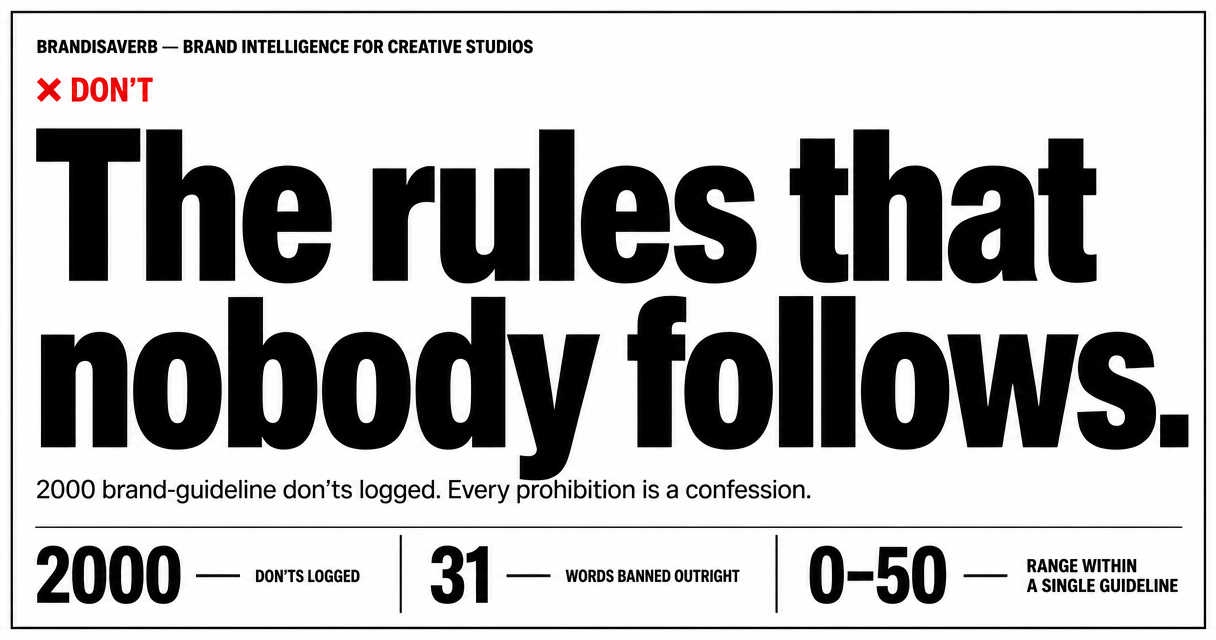
The Rules That Nobody Follows
2000 brand-guideline don'ts logged and categorized — what brands are afraid of.
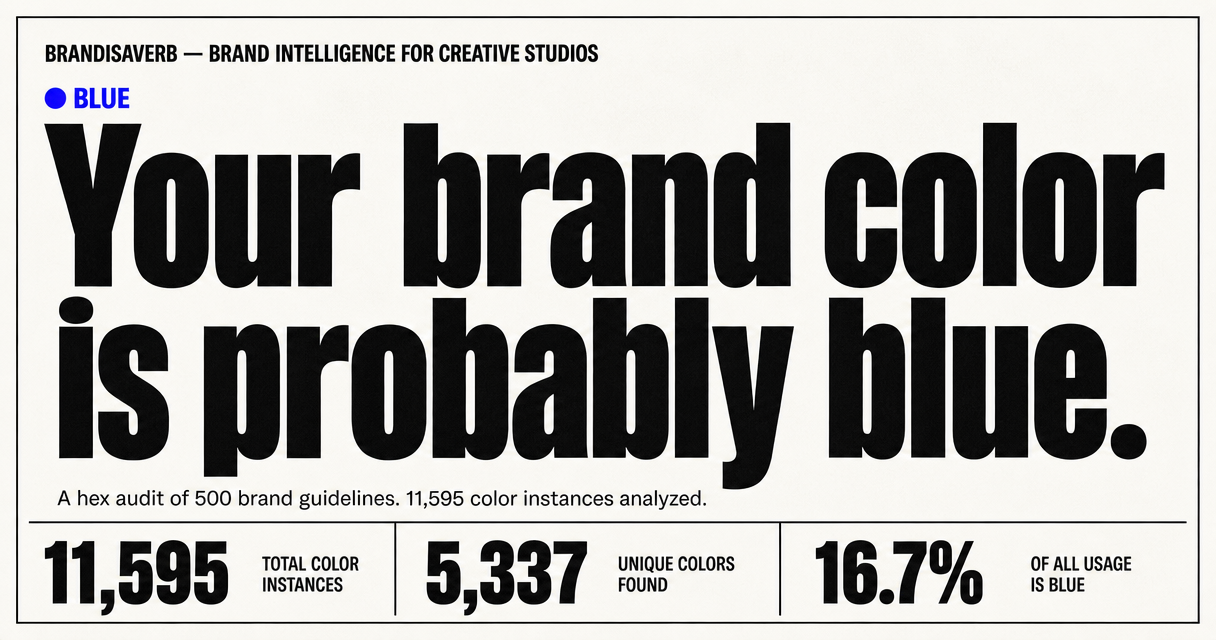
Brandbook Colors
Color patterns extracted from hundreds of guidelines, plus a color analyzer.
